

Web team blogThe rise of zero-click behaviour & why your content is more important than ever
You may have heard people talking about the term 'zero-click' searches, but what does this mean? 'Zero-click' means users can now get some of the answers they are looking for directly from search engines and other AI tools without having to click through to your pages. But don't be fooled; zero-clicks does not mean your webpages aren't important. In fact, they're more important than ever. Here's why!
The way people find information online is always evolving. The classic "ten blue links" format changed to meet the needs of users looking for images, videos, news and other types of content. Desktop displays have become more mobile-friendly, and users can now use images or voice queries to search.
More recently, you may have noticed that when you use Google or other search engines, you’re often presented with an AI Overview, which can give you all the information you need, without having to click through to a website.
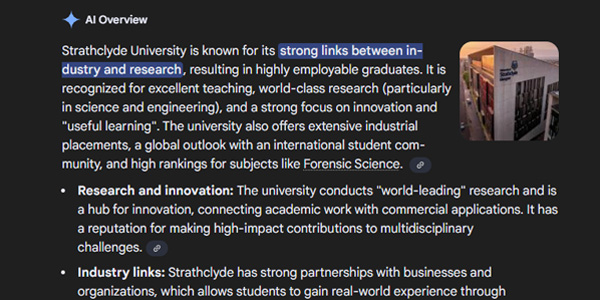
This trend is known as zero-click behaviour and is driven by search engines and AI tools that summarise key facts and snippets using the content from websites.
What does this mean for us?
For universities, where accuracy and credibility are paramount, this shift makes one thing clear: the quality and freshness of our content matters more than ever.
Keep in mind that these AI summaries pull content from our websites, so think about the queries your end user may be using to search when populating your pages.
Don’t get bogged down in aesthetics
AI tools rely on structured, well-written content to generate answers. When your content is written in plain, natural language, with clear headings and accurate facts, it’s more likely to be used (and cited) correctly by AI tools and search engines.
This should be the foundation for any new content you want to share on t4. What questions are you answering for your user? What problem are you helping to solve? Are you helping them meet their goals?
We recommend finalising your text within a Word document before you think about templates, content types or imagery. Content first, always.
When your content ticks all these boxes, it is more likely to be presented to your user in the search results. The clicks through to your pages from these results also tend to be of higher quality, with users spending more time on your pages, so make sure you're providing a great on-page experience.
What about chatbots?
Chatbots or virtual assistants can be a great tool for users to quickly find answers to questions they might otherwise struggle to find if a page is particularly text-heavy or the information is complex. However, the principle remains the same: make sure your content is well structured and accurate. Chances are, by auditing your content and ensuring it uses natural language and is structured logically, your user might not even have to use a chatbot to find what they’re looking for.
Summary
Zero-click behaviour is changing how people access information online. As search engines and AI tools increasingly answer questions directly, your website’s content must be accurate, structured, and written in clear, natural language. High-quality, user-focused content is more likely to be surfaced in AI summaries, ensuring Strathclyde’s expertise remains visible and trusted, even if users don’t click through to your site.
Key takeaways
- Evolve with your users and the technology
- Users who click through to your site may be more engaged and likely to convert – make sure your on-page experience is a positive one!
- Content first – aesthetics later
- Review your content often to make sure the information is still relevant
Useful resources
Our blog covers a range of topics to help improve web content, including accessibility guidance, user experience, t4 tips, and more!
For everything else, you can also get in touch with us at webcontent@strath.ac.uk.